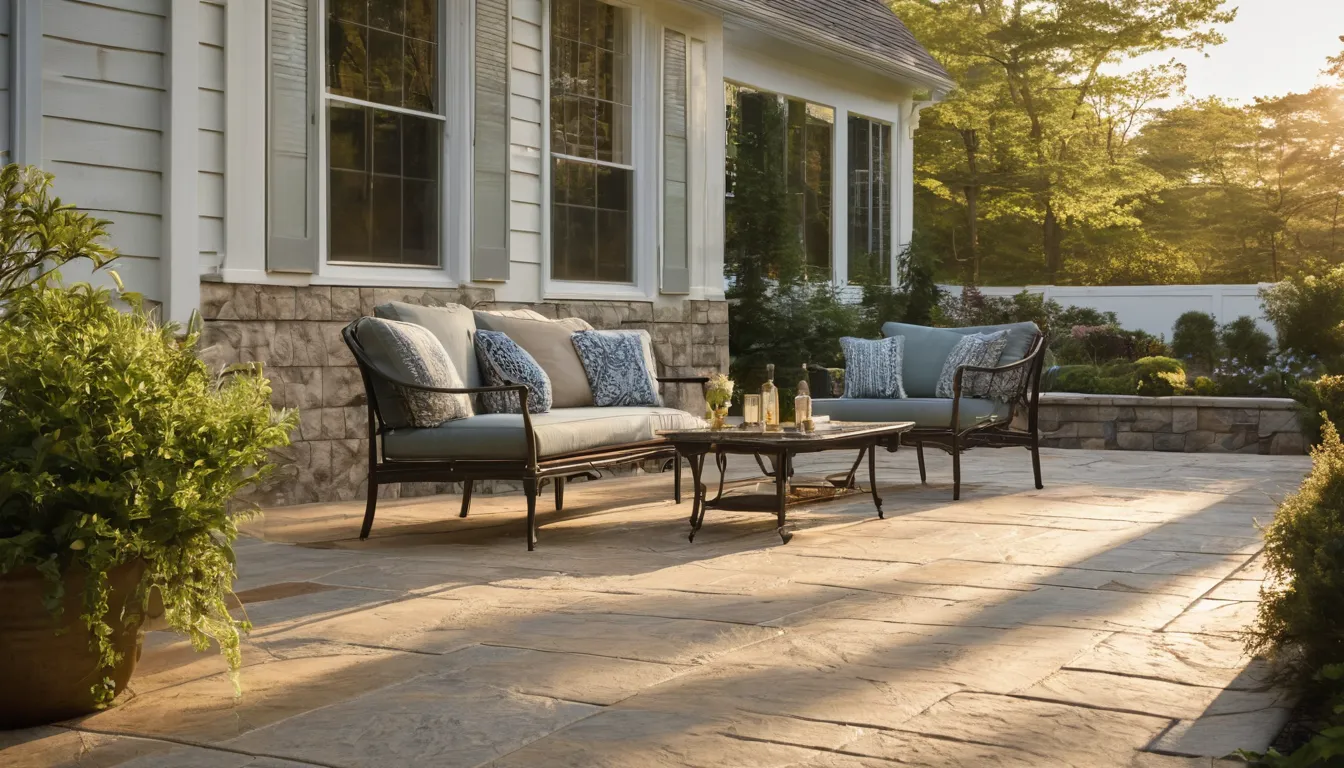
Need concrete patios in Philadelphia?
Tell us about your driveway or patio plan. Send the estimate form, or request a callback to check provider availability. Hours vary by provider.
No obligationNew Concrete Driveways & Patios in Philadelphia, PA
Request your patio estimate
Say you step out your back door and see bare dirt, a patch of weeds and a grill on a few loose pavers. You want a flat, solid place to sit. Convincemoments Concrete is a referral service that connects homeowners with independent providers who pour new concrete patios in the Philadelphia area.
We do not do the work. A local provider measures, quotes and builds. Our part is cutting down the searching. Send an estimate request, hear from providers, and compare what each one offers. There is no obligation to hire anyone. This page covers new patios only, from size and finish to drainage and care.
Say you stand at the back door on a mild spring evening. The yard is patchy. The grill sits on bare dirt. You can picture chairs, string lights and a table that does not wobble. Then you think about all the searching it would take to find someone to build it.
This page is for that moment. Convincemoments Concrete is a referral service. It connects you with independent providers in the Philadelphia area who pour new concrete patios. Less searching, more progress.
Concrete work follows the weather. Where winters are cold and snowy, the ground stays hard for months. When it finally thaws, many homeowners start asking at once. Provider schedules can fill up fast.
Say you wait until June to start. You may find yourself behind a long line of neighbors. Asking early gives you time to compare, think and choose without a rush.
The simplest path is the estimate form. Tell us about your yard and what you have in mind. Providers in the network can respond with questions or a visit plan.
Prefer to talk it through? Request a callback to check provider availability. Hours vary by provider, so the form is often easier.
Picture a patio made of loose pavers. After a few winters, one corner sinks and a chair leg catches. Poured concrete is one solid slab. It holds up a heavy grill, a hot tub pad or a full dining set.
It also needs little upkeep. A broom and a hose handle most days. And the looks can range from plain and clean to patterned and colored.
Most projects follow the same path. Details vary by provider and by yard.
Ask each provider to list these steps in the written quote. A short list is a hint that something may be missing.
Say you own a table with six chairs. Once people sit down, they need room to push back. A good rule is about three extra feet around the table on every side.
A small bistro spot may need only 8 by 10 feet. A dining area often runs closer to 12 by 12 or more. Add a grill corner or a lounge area and the size climbs. On a small lot, such as one behind a Cape Cod style home, a few feet can change the whole plan. Mark it out with chalk or rope and live with it for a weekend.
A broom finish gives a light texture that grips when wet. A smooth trowel finish looks sleek but can get slick. Exposed aggregate shows small stones for a rugged look. Color can be mixed in or added on top.
Stamped concrete patios press patterns into fresh concrete to echo stone, brick or wood. It is a popular way to get a custom look from one pour.
In cold regions, water seeps into small gaps, turns to ice and pushes outward. Then it thaws and the cycle repeats. That is hard on a slab.
So ask providers how they handle it. A well-packed base, proper joints and the right concrete mix all help. Also ask about sealing, because it can limit water soaking in.
Say you come home after a heavy coastal storm and find a puddle against the back wall. A patio should slope gently away from the house, often about a quarter inch per foot. Water should never pool at the foundation.
This matters most with full basements and older stone or block foundations, which can take in moisture. Tell providers what your basement is like. If you already see cracks or damp walls, foundation repair experts handle that as a separate job. This page is about new concrete flatwork, not concrete driveway repair or fixing an existing structure.
A patio that touches the house needs thought about where it meets the wall. A gap with flexible filler lets the slab and the house move on their own. A freestanding patio out in the yard can be easier to keep clear of the foundation. Providers can tell you which suits your layout.
Picture three quotes on the kitchen table. The numbers differ. Why? Usually the details differ too.
Line them up and look at slab thickness, base depth, reinforcement, finish, drainage and removal of old material. Check the timeline and what happens if the weather turns. Compare, then decide. There is no obligation, and a clear written quote is a good sign.
Some towns ask for a permit for a new patio, especially a large one. Neighborhood associations may have rules too. On tight lots, including many multi-family properties, know where your line sits before anyone digs. A provider familiar with local rules can point you in the right direction.
Fresh concrete needs time. Providers usually ask you to keep foot traffic off for a short while and heavy items off longer. Follow their advice.
In the first winter, go easy on deicing salts, which can scar young concrete. Use a plastic shovel on snow. Sweep often and reseal when the provider suggests.
Say you send the form tonight. By next week you could have a few real answers in hand. That is far better than another evening of scrolling.
The provider marks the shape, checks the slope and clears grass and soil from the spot.
A packed gravel base, wood forms and steel reinforcement give the slab a steady start.
Concrete is poured, leveled and finished, with joints cut so cracks stay neat.
The slab cures with care, then the provider clears away forms and leftover material.
Prices vary a lot by region, size, access and finish. These typical U.S. ranges are only a starting point. Get a written quote from each provider so you can compare like with like.
| Item | Typical range | Notes |
|---|---|---|
| Plain broom-finish slab | $6 – $12 per sq ft | Most common, simple look |
| Stamped or patterned slab | $12 – $20 per sq ft | Cost rises with detail |
| Color or stain add-on | $1 – $4 per sq ft | Depends on method |
| Site prep and gravel base | $1 – $4 per sq ft | Varies with soil and slope |
| Removal of old slab or pavers | $2 – $6 per sq ft | Higher with hard access |
| Drainage grading or drains | $300 – $2,000 | Depends on yard layout |
Share your yard, rough size and finish ideas through the estimate form in a few minutes.
Independent providers may reach out with questions or to set up a visit.
Look at thickness, base, finish and drainage, not only the bottom-line number.
Pick the provider who fits and agree on timing when the weather allows.
Send one request instead of hunting through endless listings and mismatched search results.
Providers in the network work in your area and know the weather and soil.
Hear from different providers, then line up their written quotes side by side.
Ask questions, compare options and take your time before you decide anything at all.
Tell us about your driveway or patio plan. Send the estimate form, or request a callback to check provider availability. Hours vary by provider.
No obligationMost residential patios are poured about four inches thick over a packed gravel base. Heavy loads like a hot tub may need more. Ask each provider to put the thickness in the written quote.
Light foot traffic is often fine after a few days, but heavy furniture and grills usually need longer. Cure time depends on weather, so follow your provider's instructions.
It depends on your town and the patio size. Some places require one and others do not. Check local rules or ask the provider what is needed for your project.
Tell us about your driveway or patio plan. Send the estimate form, or request a callback to check provider availability. Hours vary by provider.
No obligation